Injustice Experienced By Atty. Keven McKenna In Rhode Island
A Maverick Dealing With The Mayhem
Tuesday, 20 Dec 2011 - The lawsuit is claiming an attempt to "chill" his First Amendment rights and that the Supreme Court overstepped its authority by launching an investigation into his law practice. The lawsuit names Chief Justice Paul Suttell and five other defendants. The 24-page complaint demands an end to the investigation and declares the court's actions unconstitutional. McKenna alleges the Supreme Court is essentially on a witch hunt by assigning attorney Marc DeSisto - one of the defendants in the suit - to dig into his law practice.
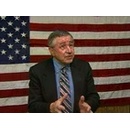 "Marc DeSisto was putatively appointed by Defendant Paul Suttell, without Rhode Island constitutional authority," McKenna (pictured at left) wrote in the complaint. "On the pretext of inquiring about possible bookkeeping errors in Plaintiff's business accounts for the last seven years in order to bring a Complaint designed to place the Plaintiff in false light as retaliation for the Plaintiff's advocacy of litigation to strip the Rhode Island Supreme Court of its unconstitutional Article IX powers as required by November 2004 Separation of Powers Amendments."
McKenna has been an outspoken critic of the Rhode Island Supreme Court and especially its former chief justice, Frank Williams, claiming that the court was "usurping" the Separation of Powers amendment passed by voters in 2004. "The Rhode Island judiciary still manages a $90 million-plus budget, [...] all in flagrant disregard of the will of the voters who approved the 2004 amendment," McKenna wrote in a letter to the editor in The Providence Journal this year.
The lawsuit was assigned to U.S. District Court for Rhode Island Chief Judge Mary Lisi. But in a filing made Monday, McKenna asked the courts to assign a different judge because Lisi was an assistant disciplinary counsel for the Rhode Island Supreme Court from 1988 to 1990.
Tuesday, June 14, 2005 - McKenna takes on Chief Justice Williams again - The Providence lawyer calls on the state Supreme Court to withdraw its decision on his challenge to the chief justice's authority to hold office. In a blistering legal memorandum, Providence lawyer Keven A. McKenna is asking the state Supreme Court for a chance to reargue a lawsuit that claims Frank J. Williams is no longer the high court's chief justice.
This cases' Butt Kissing Award goes to Att. Gen Patrick Lynch and his office - read why below:
The petition for reargument was denied with Attorney General Patrick C. Lynch's office, which represented Chief Justice Williams, urging the court to reject McKenna's petition, saying it "simply disputes in often inappropriate and insulting terms the well-reasoned decision entered in this case."
Caught.net note: the courts love throwing out absolutely ridiculous legal reasoning. When they receive ANY degree of criticism for it their arrogance shows with them being insulted and indignant.
The Supreme Court dismissed McKenna's suit last week, saying McKenna lacked legal standing and that the state Constitution does not prohibit Williams from being both chief justice and a member of a military review panel set up to hear appeals from suspected terrorists held at Guantanamo Bay, Cuba.
The following paragraph shows how our court system twists and bends facts and reality to maintain the status quo.
In a memo filed yesterday, McKenna said the Supreme Court's
decision was "based upon bare, empty fabrications of logic,
fact and law that defy the clear meaning of the provisions of the
U.S. and Rhode Island Constitutions, and state and federal
law." McKenna called for the court to withdraw its decision
and return the matter to the Superior Court, which had determined
McKenna did have legal standing.
In his memo, McKenna said,
"This court cannot create an amendment to the Constitution by
implication." He said, "There is simply not one case and not one
iota of evidence in any document, or any history book, to support
the speculative self-serving opinion of this court exempting itself
from the dual office-holding prohibitions of Article 3, Section
6." McKenna said no other judge in the state Constitution's
162 years has claimed a right to hold two judgeships -- one in
Rhode Island and one in another jurisdiction. "For example,
could Judge Ronald [Lagueux] have kept his position as a state
Superior Court judge when he was appointed as a U.S. District Court
judge in Rhode Island?" McKenna wrote. "After all, it is only a
block away, and the federal court does not handle that much
business anymore. Perhaps a Rhode Island Superior Court judge,
vacationing on the Vineyard, could hold a summer job there as a
part-time judge?"
McKenna criticized the Supreme Court for
concluding that only the attorney general can challenge an
official's right to hold office on behalf of the public. In
this case the attorney general was representing the Chief
Justice! "If citizens cannot enforce the limitations upon the
powers they have delegated by their votes to the state of Rhode
Island, then who can?" he asked. "The fox has been given the
chicken coop." McKenna also criticized the court for ruling
on the merits of the case after halting the trial court proceedings
and deciding he lacked legal standing. "The court made up its
own question and improvidently answered it gratuitously, on
speculation only, and without the opportunity to brief or argue the
question decided," he wrote. "This honorable court should have the
humility to reconsider the breadth and destructive nature of their
recent opinion and withdraw it."
The Supreme Court ruled that the state Constitution's ban on dual office- holding no longer applies to members of the court because judges are "appointed" rather than "elected." A three-justice majority said that change happened in 1994 when another section of the Constitution was amended to institute a merit-selection process for state judges. Read comments by Justice Flanders against the handling of McKenna v. Williams.
See other criticisms by Attorney Keven McKenna regarding Justice Williams Also Atty. McKenna was one of the few lawyers willing to take on Charles Picerno's battle regarding the traffic court.
FOOD FOR THOUGHT
The Exercise Of Power Is The Fastest Acting Intoxicant Known To Man.
You Can Get Drunk Before You Know It.
Many times the reason or purpose for events in our life initially escapes us,
but I am certain we can find reason and/or purpose in everything that happens!
It takes a short time to learn to exercise power, but a lifetime to learn how to avoid abusing it.
We are no longer a country of laws, we are a country where laws are "creatively interpreted."

Sniff Around This Site!
OR
Search Rhode Island Criminal Database or
RI Supreme Court Opinions & Orders

-- ADVERTISEMENTS --